What if you didn’t know your date of birth? Agreed, you wouldn’t be able to celebrate your birthday. But you would also not know that you are 70 or 80 or 90. Then how old would you feel?
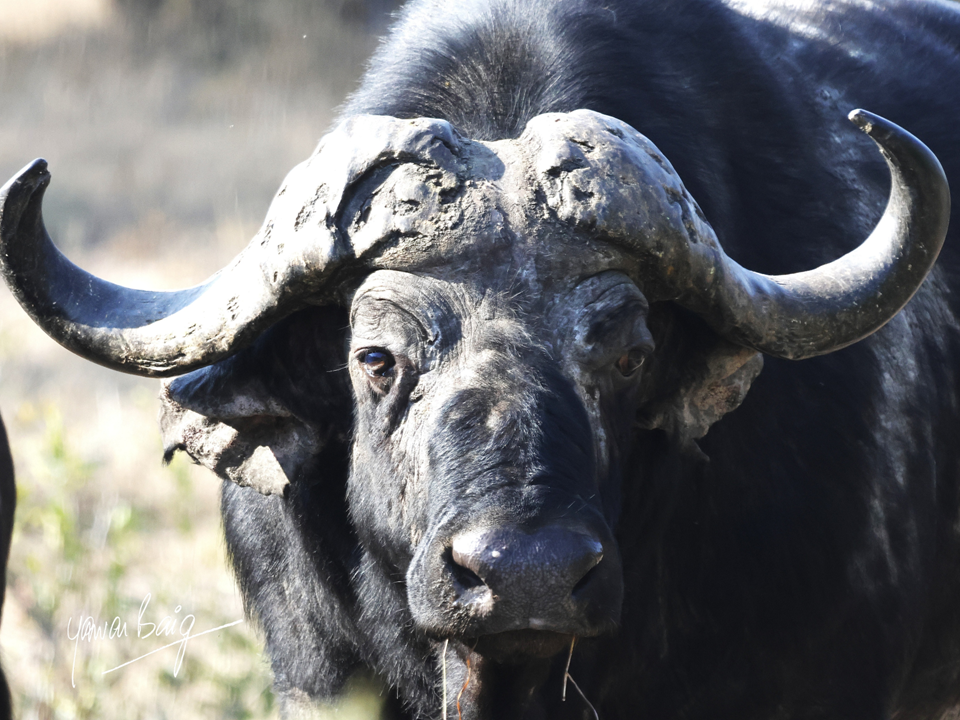
An old warrior who doesn't know his DOB and doesn't care
Incidentally not knowing your date of birth is nothing unusual or novel. There are millions of people all over the world who live in villages and in whose cultures birth of babies happens at home with or without the aid of a midwife. Dates of birth are neither recorded nor celebrated because that is not part of their tradition. Birthday parties are a very Western urban ritual, and I have lived and worked with people who had no idea what a birthday party was. Such people are as old as they feel. That is what I am referring to.
This article is for those who allow the ‘old man syndrome’, into their lives, which ‘kills’ many before their time. Same advice for women – if they need it. Nobody can physically die before their time or live after their time comes. But what happens to us qualitatively or I should say, ‘What we allow’ to happen to us qualitatively, is really up to us. Age with good health, as a good friend puts it, is a ‘genetic lottery.’ Lottery or not, it is not defined by us. We don’t get to choose how long we live on this planet. But we do get to choose how we want to live. Barring disease and accidents the quality of life in our dotage depends on us. Geriatric care specialists say that most geriatric ailments are lifestyle related. Think about this:
The biggest problem, post-retirement, is a loss of purpose. I recall reading somewhere that most men die within two years of retirement. Some companies run courses for ‘Post-retirement Life’, to help people to cope with retirement, advising people how to live when they don’t need to go to work daily. I don’t know how women who work in full-time jobs or people today in hybrid jobs working partly from home handle this, but a loss of purpose is a big factor which impacts retired people negatively, who feel that their lives have no value any longer and so their being alive doesn’t matter. They may not express this quite so directly but that is what results in them ‘letting things go’, as it were and just going to seed. They get sloppy, lazy, drop their standards, stop going out, meeting people and get lonely and depressed.
The Law of Entropy applies to us also and as soon as we stop taking care of ourselves, we deteriorate physically, mentally and spiritually. Going to work forced us to take care of ourselves. A social life did the same. But since the two are linked for most people, as soon as one ends, so does the other in all meaningful ways and the decline is fast and can be final. I say, can be, because it is not inevitable. It depends on what we choose to do. So, to stay relevant, vibrant, and purposeful, is in our hands. But that requires us to change our source of motivation from the external environment to our own internal drive.
The most powerful sign of a loss of purpose is the lack of a compelling schedule. Or to put it more painfully, gaining freedom. The most dreaded answer to, ‘What shall I do now?” is, ‘Whatever you like.’ That is because of how you and I were raised. From the time we opened our eyes, all through kindergarten, school, college, organizational life, marriage and all the way until yesterday, someone told us what to do and when. And if we didn’t, there was a price to pay. A cost. A punishment. Be that physical, financial, career wise, a frown, the cold face, silence, or the doghouse. Freedom is for the birds. And they too must fear the Sparrow Hawk. It is this freedom which scares us. We have been conditioned to justify every breath we take, every move we make, to someone who has formal or informal authority over us. Remember the song we Boomers who own this world – Gen Z go fly a kite – which also we own…..knew in school and college? Police….
Every breath you take and every move you make
Every bond you break, every step you take,
I'll be watching you
That, my friends, is literally how our lives were until we retired. We have become used to being watched so much that we take comfort in it. Slavery and subjugation are very comforting. When we accept subjugation, we deceive ourselves that we are not responsible for the consequences of our actions and feel justified to conveniently blame ‘AUTHORITY’, if things go wrong. But does that blaming save us?
Stop for a second and ask, who pays the price when things go wrong? We? Or those who made the rules that we followed so slavishly without question? For example, who gets sacked if a business starts to lose money? The Board and Top Management or workers who had no share in the decision making? Who lose their home if banks collapse? If you forgot, go look up Subprime crisis 2007 – 2010 and see who got a bailout? Who can’t get a job because the education system failed to keep up with the pace of changes in technology, environment or discovery and so you graduate with a degree that has no relevance? In that case will they refund your fees? Ironically therefore, the panic of retirement is akin to what the bird which has lived in a cage all its life feels when the cage door is opened for it to fly free – it retreats into the innermost recesses of the cage because it knows the cage. It doesn’t know the open sky and is terrified of it. Its fear is justified because cage birds can’t survive in the wild. They are easy prey for every hawk. But you’re not a bird.
Freedom is the most terrifying thing in the world. Everyone claims to want it, but when they get it, it frightens them into next week. They are at a loss. Castaways on an island without a clock. Or adrift on the sea in a small boat. That’s what retirement does – casts you away from the comfort of schedules, managers, secretaries, time-clocks of one kind or another. Watchers, noters of details, monitors of your comings and goings. All claimants on your freedom. But you and they have been in this elaborate game for so long, that to suddenly be cut loose one day in the name of retirement and be ‘set free’, is unnerving, deeply unsettling, and you will say, unnecessary. But it happened. Now what?
The biggest challenge is, what to do with time? Suddenly you have a lot of it. Some people take refuge, albeit unconsciously in forwarding messages on WhatsApp, mostly without reading them, in which pursuit they spend 6 – 8 hours daily. Others sleep at all hours, dress sloppily, eat without thinking and suffer the consequences of that, become nags at home and nosey neighbors, quarrelsome, complainers and overall, not nice to be around. This is a vicious cycle which makes them lonely, depressed and depressing, and turns a part of life which should be very pleasant into something sad. The really sad part of this is that it is totally unnecessary and not inevitable at all. Let me try to share some thoughts about how you can reverse this, even if it has started in your life already. It is not difficult or painful. The results will be delightful, and you will thank me for putting you back on the rails.
First things first – Schedules. Schedule is the name of your parachute or life vest. You are used to schedules, which is what your work-life gave you. For better or worse, scheduling started in our school life. Bells, buzzers, periods for this or that, intervals and breaks which also had titles – we were not left alone to do whatever we wanted even in the break. All this is oppressive, but these were guardrails to force us to walk on the straight and narrow. Now, suddenly there are no guardrails, and you must learn to walk without them. So, let me put you in a place that you are familiar with – schedule. Make a schedule for your day and STICK TO IT. I capitalized that because the key is not the schedule but sticking to it. Following it even when you don’t want to. Be prepared. You will not want to follow it, almost from the word, ‘Go’. But you must. Compel yourself because in that compulsion is quality of life.
It must start with movement. Movement is the lubrication for joints that would like to be still. To rest from decades of work, of bearing loads, of climbing and descending, where today even getting out of a chair is a conscious decision which you would rather not take. Much easier to call someone to do their good deed for the day and fetch you a glass of water. But no. You must get up. Decide. Stand up. Walk. And get your own water. Because that is the lubrication that your joints need, even if they don’t agree. So, write WALK in your schedule at the very top. Don’t just write. WALK. 5000 steps at least. Every day. Sunday is also a day. And ‘holiday’ is not a day in any week. Go look it up if you don’t believe me. Only 7 days in the week and ‘holiday’ is not one of them. Remind yourself that rigidity is inevitable. Be rigid with yourself in walking or your joints will become rigid. When you do it regularly, walking will become a pleasure that you’ll enjoy. The alternative is a wheelchair which is decidedly unpleasant. So, decide.
Second item on the list is to lift weights. Not randomly because that is a good way to land in hospital instantly. Lift weights under the supervision of a coach who knows what he is doing. Check to see if he works with older people. And pay him what he asks. That is cheaper than any hospital bill. Lift weights because muscles deteriorate and you lose strength much faster as you grow older. And once you lose muscle, it doesn’t regenerate. Or at least not fast enough to make a difference. The trick is not to lose it and that will happen with regular weightlifting. While all muscle groups are important, the most important are your legs. Weak legs = wheelchair. Walking is the best exercise to strengthen your legs. Another one is to stand up from a chair without holding anything. Raise your arms to shoulder level and hold them before you straight out and stand up from the chair. Keep another chair or some other support within reach. You definitely DO NOT WANT TO FALL. As my doctor tells me, “Do whatever you want, but don’t fall.”
Do a set of stands from a chair – as many as you can do comfortably, a few times a day. A third way to test as well as a very good exercise is to see if you can climb stairs without pulling yourself up using the banister. Do keep a hand on it to steady yourself. Once again, don’t fall. But if you can stand up from your chair and climb stairs without support, then you can pat yourself on your back – you are doing well. If not, you need to get into action before you get to the point of no return. I can’t emphasize this enough. For older people to recuperate lost muscle is very difficult indeed. I don’t like to say impossible, but it can be. So, you don’t want to reach that level.
Third item on the list is the mind. Incidentally, all items are equally important, and my list is not in order of importance or priority. The brain is also a muscle and subject to the same rule – don’t use it, lose it. There are two things to do with using the brain. Reading and problem solving. Reading is reading. I find serious reading to be most beneficial. I love reading biographies and history. Especially social history. I also like reading political analyses and then looking at that situation and doing my own analysis. I challenge myself by holding myself to the rule that every conclusion I arrive at must have a data-based reason for it. It must not simply be my opinion. I play a mental game by asking myself – What if? I take a historical incident and ask, ‘What if such and such were different?’ and see what conclusions I draw. Another game is to ask myself what I would do if I was in the place of one or the other of the protagonists in the story. The idea is to exercise the brain. There are no right or wrong answers to these questions. But it is good to stretch the brain to solve problems. A very beneficial game is chess, which is all about strategizing, planning and anticipating situations and acting to extract benefit. Any brain-game like that is beneficial.
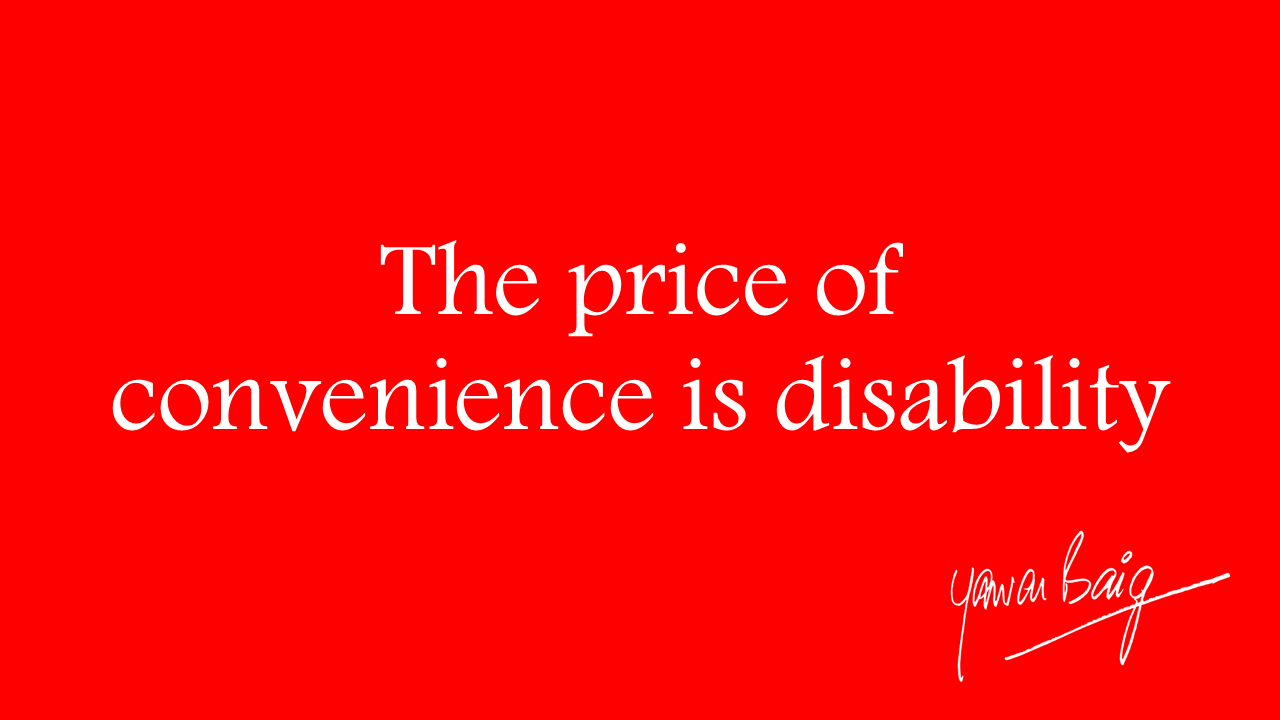
The biggest danger is to use things that make the brain lazy. Like ChatGPT for example. It is much better to force yourself to think, analyze and write. If you need to research, do it the hard way. That will make your brain stronger. Please remember, the price of convenience is disability. Spending endless hours scrolling reels, or on TikTok, Instagram or forwarding WhatsApp doesn’t qualify as brain exercise. It is highly detrimental and a total waste of our and other people’s time.
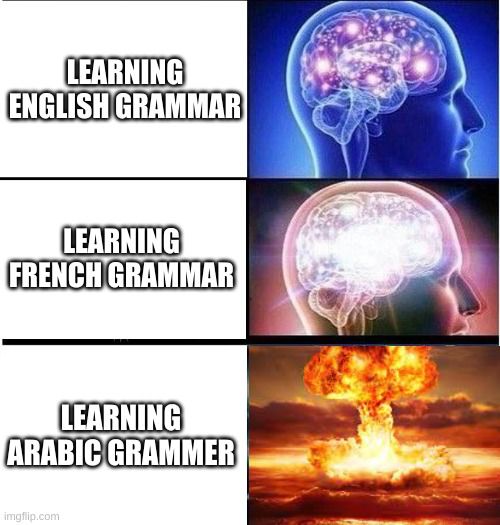
The best thing to keep the brain not only healthy but generate new neurons is to give it difficult tasks. The more difficult the task, the better it is for the brain. The best is to learn a new language. Remember, it is not about learning, so don't get frustrated if you find that you can't remember new words and the rules of grammar. It is about exercising your brain and the more it has to struggle, the stronger it is gets. Learning anything new works. So, if language is not your thing, then do whatever it is, as long as it is new, unfamiliar and challenges you.
Finally, and most importantly, spiritual health is critical to living a healthy life. It begins with an attitude of gratitude. My favorite reminder is what the Prophet Muhammad (Peace be on him) is reported to have said. “If you wake up with a healthy body, a roof over your head, and enough food for the day, it is as if the entire world has been collected for you.” Just think about that. Food for that one day only. We have refrigerators stocked with food for months and still complain. Complaining drains you. Gratitude fulfills you and fills your life with light. Feel grateful and express gratitude. It is important to express gratitude. Gratitude helps us to be conscious about the blessing we are feeling grateful for which enhances our enjoyment of it. It is as if it has been increased just because we are thankful for it.
Remember that the most important blessings have names. It is the people in our lives, often those we take for granted until one day we lose them and then we don’t understand what happened and why we feel so desolated. Show appreciation and express gratitude while those people can still listen to you. The dead don’t hear their eulogy. Don’t wait that long to say what you should say today.
Even more finally, and importantly, laugh. A good sense of humor is a lifesaver and a source of great goodness for all around you. Be silly. Laugh at yourself. Laugh with others. Never laugh at anyone. That is not funny. Have fun. Not everyone gets to be old. It is a privilege. Enjoy it in good health.
Comments (0)
Please log in or sign up to leave a comment
Loading comments...